This programme offers high school students an opportunity to develop practical skills and interdisciplinary thinking through a real university-level research project. It features a set of 5-day project-based summer projects for high school students (ages 16-18), with teams of 3 guided by student mentors, and ‘sprints’ and daily supervisions. High school students (buddies) and Arts Technology Lab (ATL) staff and interns (mentors) explore how storytelling, culture, and engineering can be combined to address real-world challenges.
Buddies will work in teams on intensive projects and are expected to produce a functional or semi-functional prototype by the end of the programme. Mentors will be responsible for supporting research and, with teachers, supervising the overall learning process. The mentor-led group work will include tasks such as background research, data analysis, and result reporting. The programme will conclude with a final showcase and judged presentation, where students will demonstrate their products and receive awards.
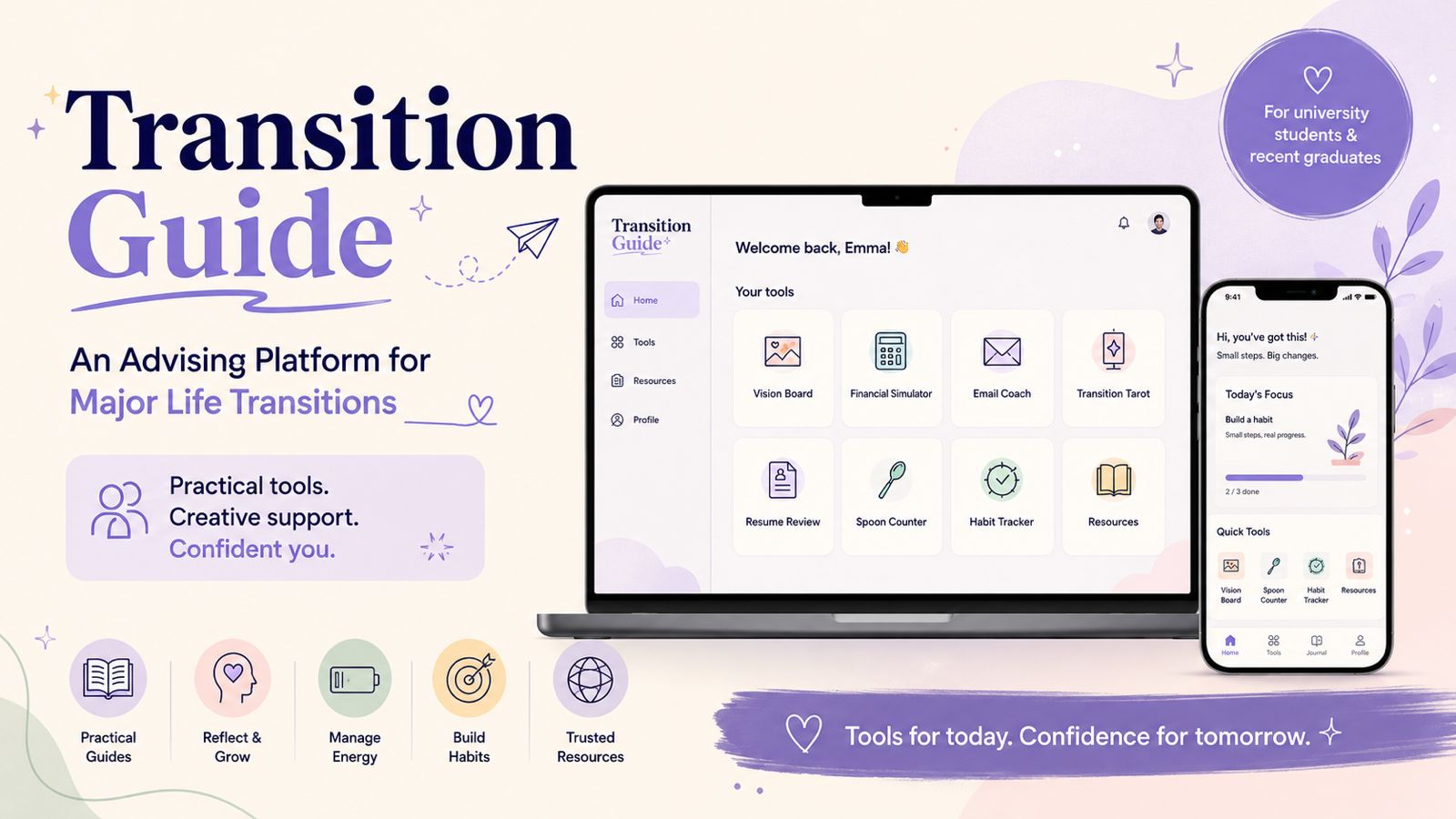
Transition Guide: An Advising Platform for Major Life Transitions
The transition from the highly structured environment of a university into the independent “real world” represents one of the most volatile developmental shifts in a young adult’s life…
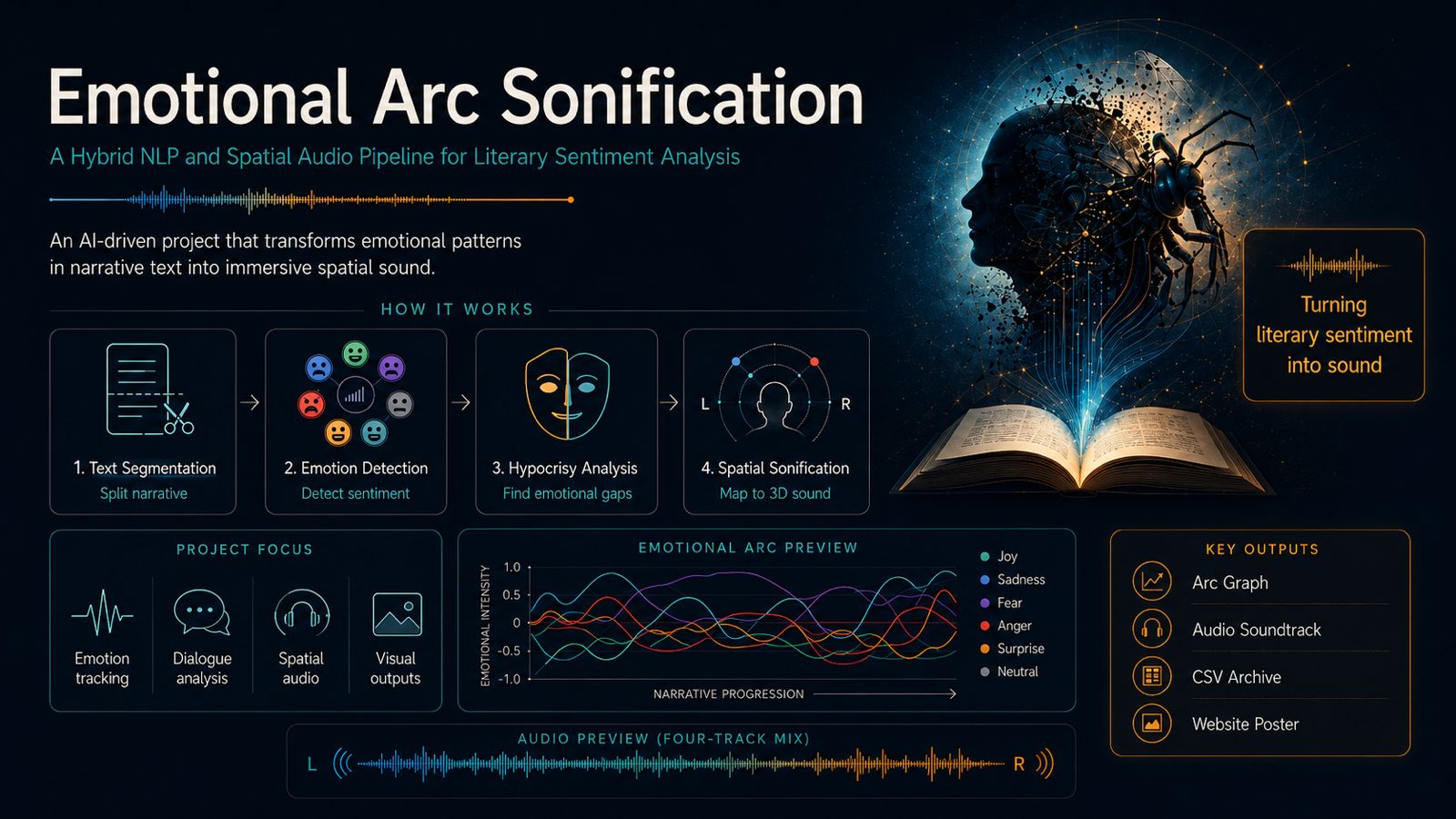
Emotional Arc Sonification: A Hybrid NLP and Spatial Audio Pipeline for Literacy Sentiment Analysis
Kafka’s narrative has long invited interpretation through philosophical, psychoanalytic, and existentialist lenses. Scholars have examined it as a critique of modernity and enlightenment rationality, as a clinical portrait of psychic collapse under labor capitalism, and as an allegory of existential alienation…
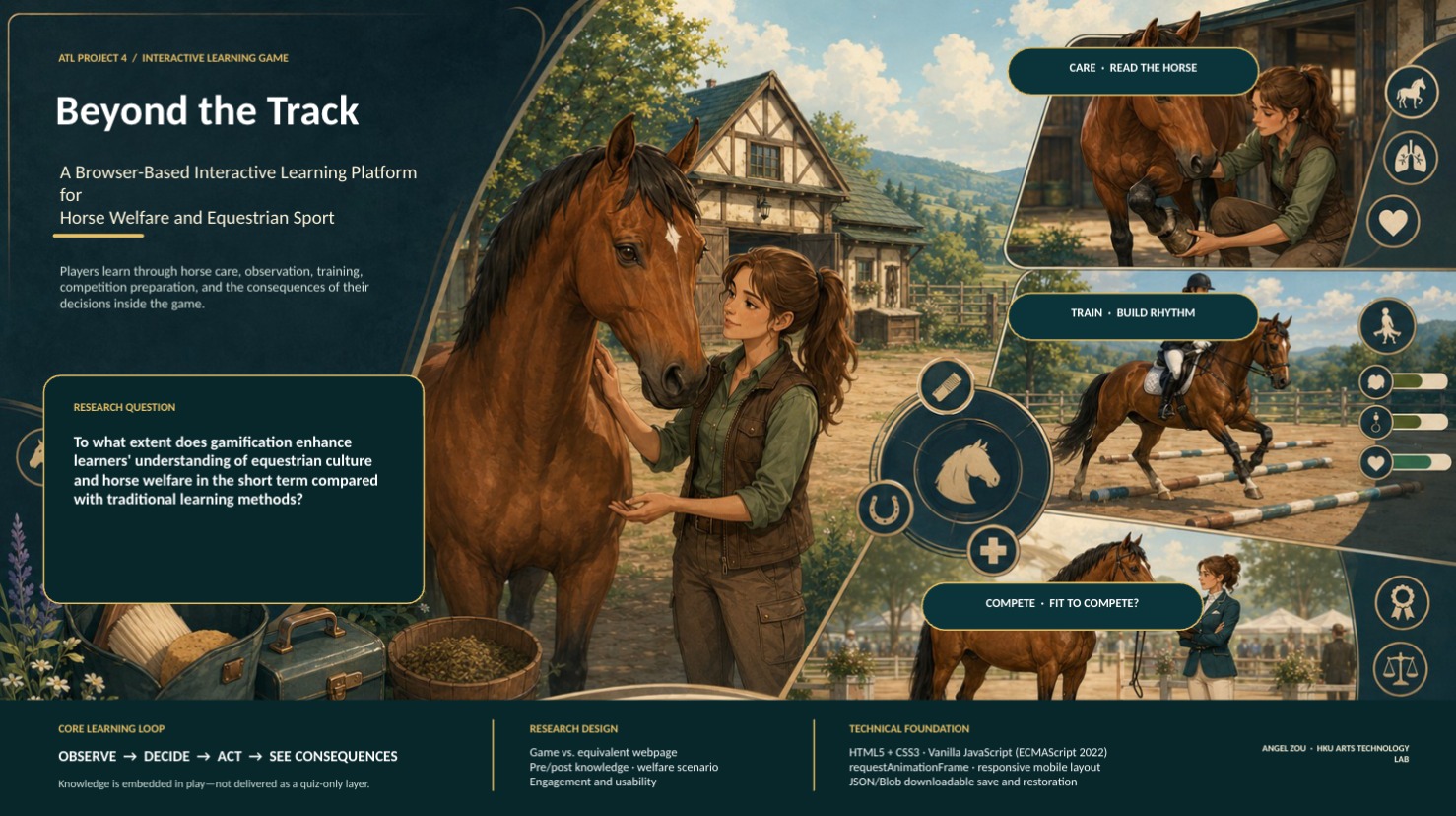
A Learning Platform for Horse Racing and Equestrian Sport
Horse racing and equestrian activities have long histories as public sports, cultural practices, and forms of entertainment. This project presents equestrian culture beyond gambling by focusing on Olympic history, horse care, rider training, sportsmanship, public education, and ethical discussion.
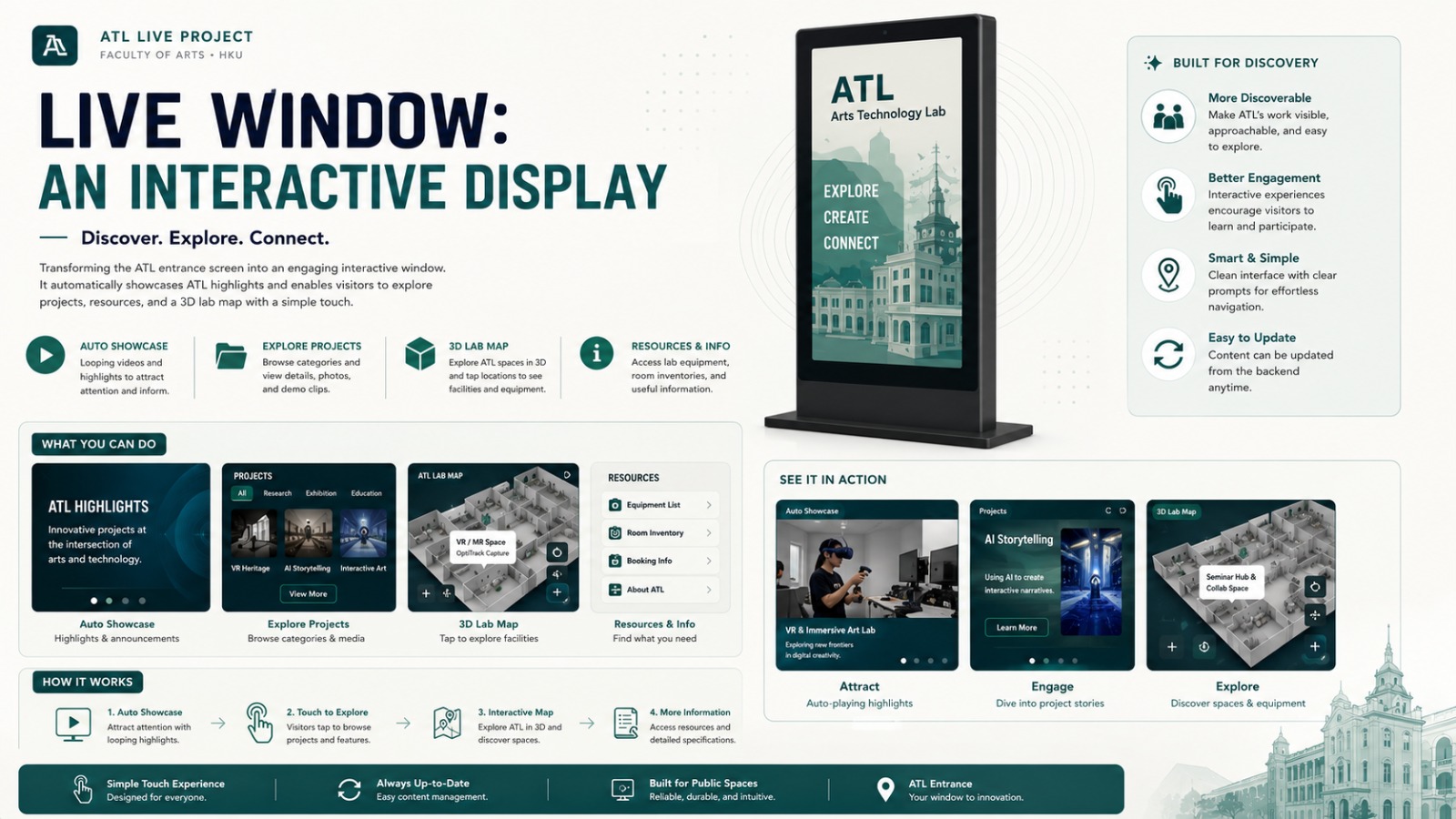
This research aims to transform the entrance screen into an interactive “live window” for ATL. It can automatically display videos, project highlights, and a 3D map of ATL, while also allowing visitors to browse project details and explore ATL resources. By creating an attractive and easy-to-use interface, the display can help more visitors discover ATL’s creative achievements..
Stories Reborn: AI Videos for Preserving Cultural Memories
Human history contains many cultural legends, local stories, oral traditions, and lesser-known historical memories, but many remain only in written records or limited community memory. Only a small number of stories become widely known, so less familiar stories may gradually be forgotten when they are not presented in forms that match contemporary media habits. Short films and digital storytelling can make intangible cultural heritage more accessible to younger audiences and wider public.
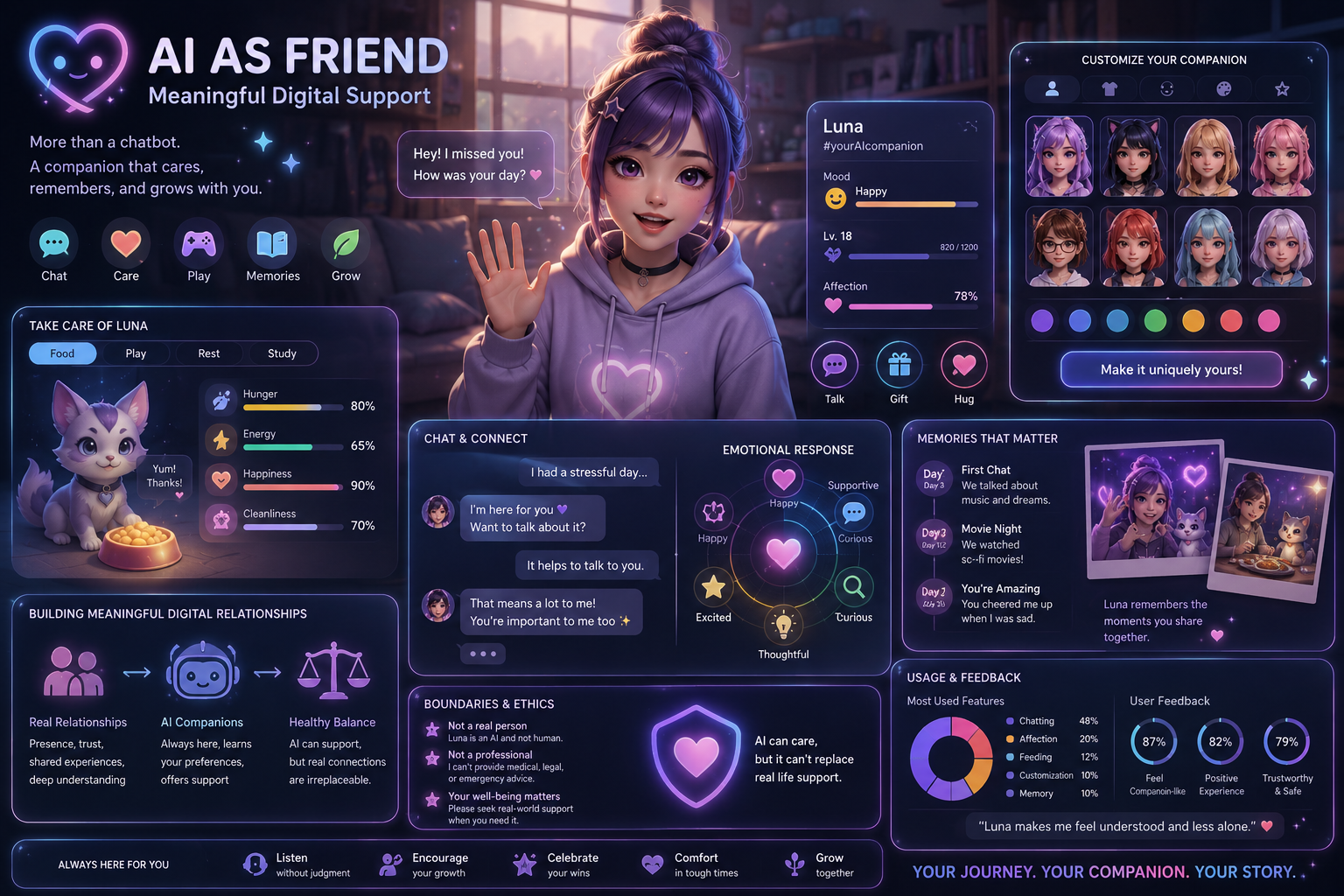
AI as Friends: An AI Project on Meaningful Digital Support
People now are using AI companions for emotional support, conversation, or daily interaction. At the same time, public discussions have raised concerns about emotional dependency, misleading advice, unsafe health guidance, and manipulation risks in AI companion systems. Recent reporting and research have noted both the growing use of AI companions for emotional support and the need to evaluate their risks carefully. This project takes a more philosophical view by asking what kinds of positive relationships may be possible between users and artificial companions.
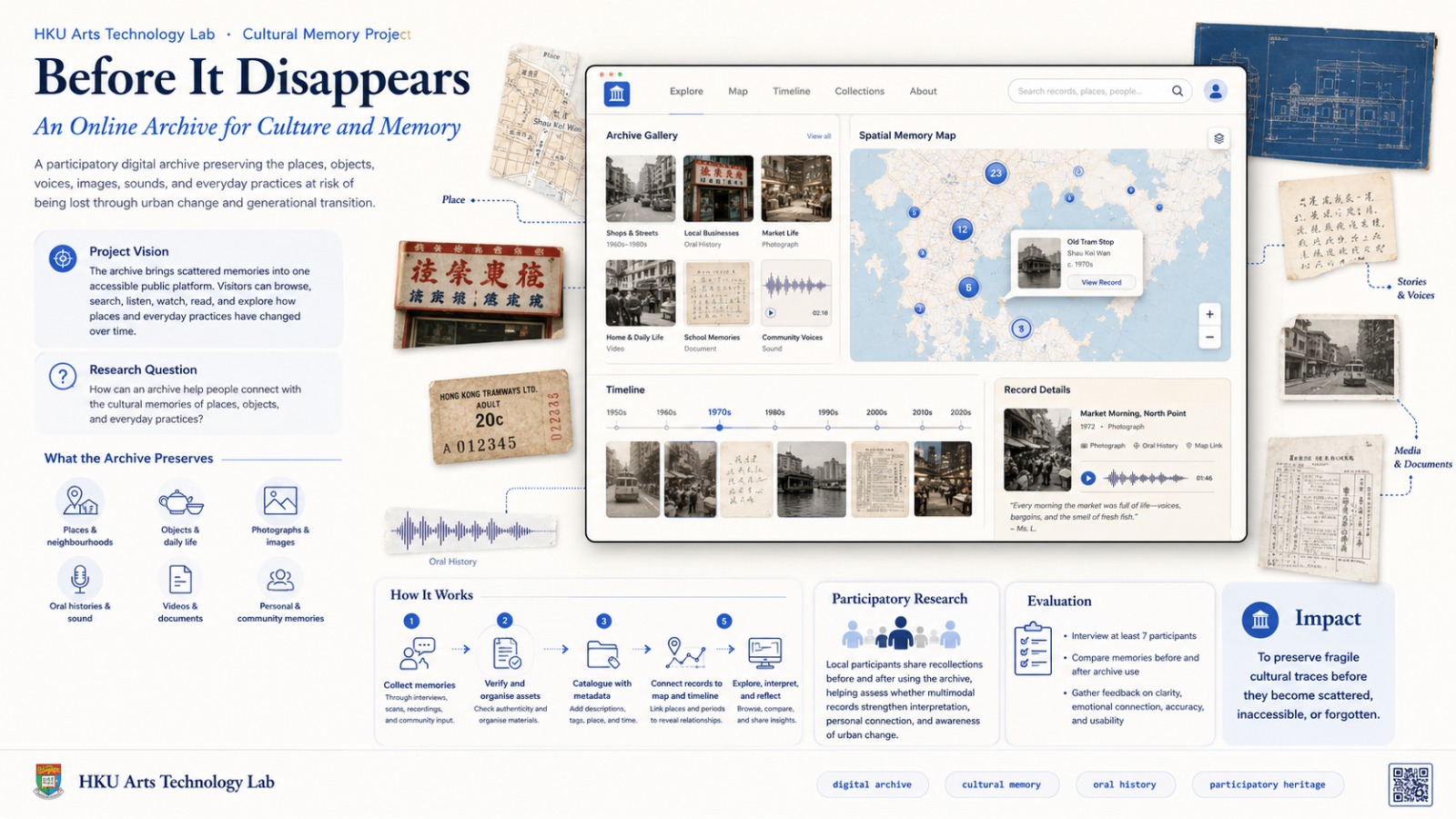
Before It Disappears: An Online Archive for Culture and Memory
Cultural memory is often fragile because it depends on objects, places, voices, images, and personal recollections that may not survive urban change or generational transition. As neighborhoods are rebuilt and everyday practices disappear, important traces of a city’s cultural life can become difficult for younger generations, newcomers, and former witness to access. This research aims to build an online archive to preserve materials before they become scattered or lost by gathering their information including written records, sounds, and so on.
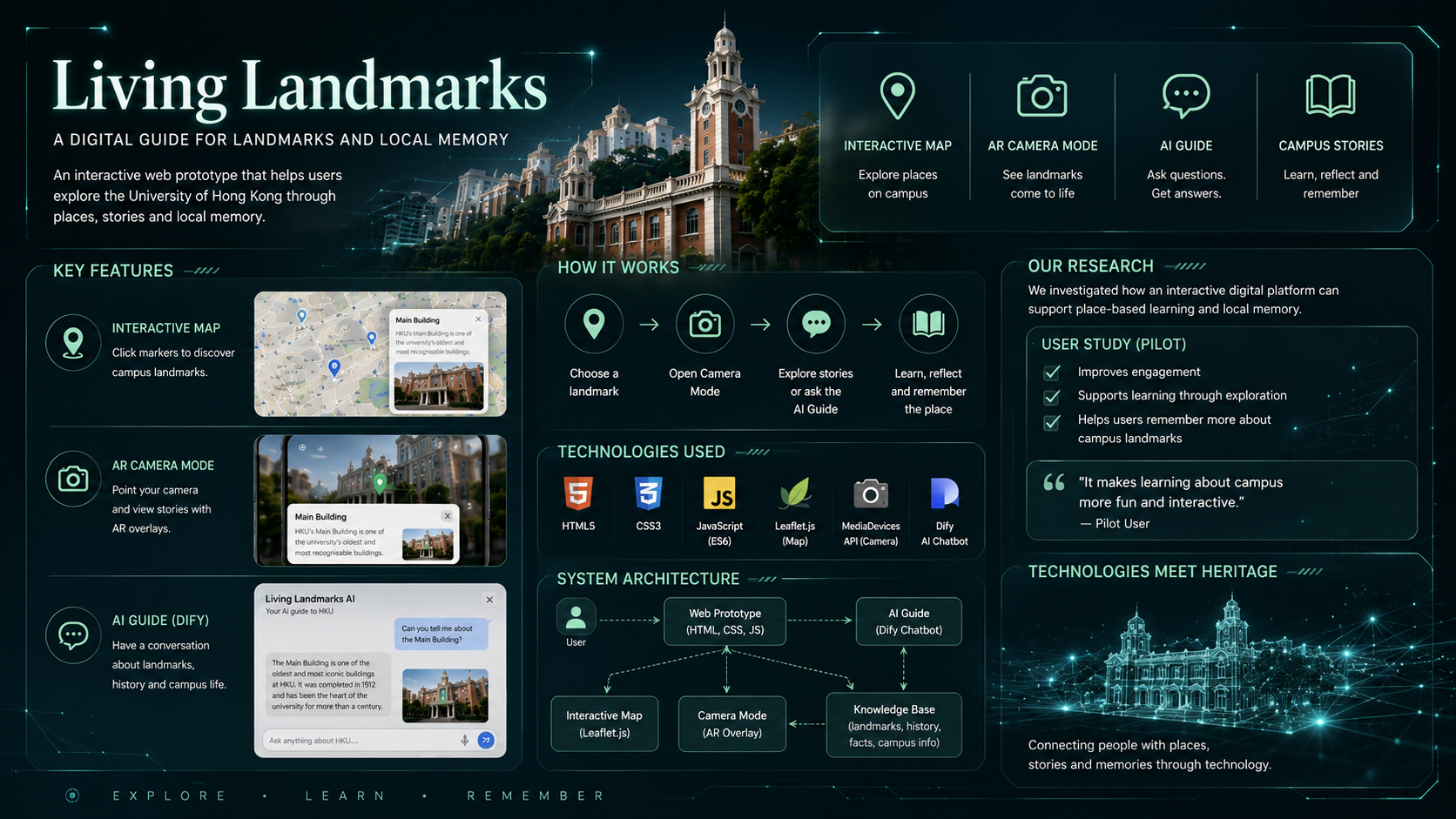
Living Landmarks: A Digital Guide for Landmarks and Local Memory
This project aims to investigate how digital technologies can transform static landmarks into more intuitive, informative, and interactive experiences. Through a mobile-first interactive platform, users can access landmark-related information by scanning QR codes and interact with digital content more engagingly.
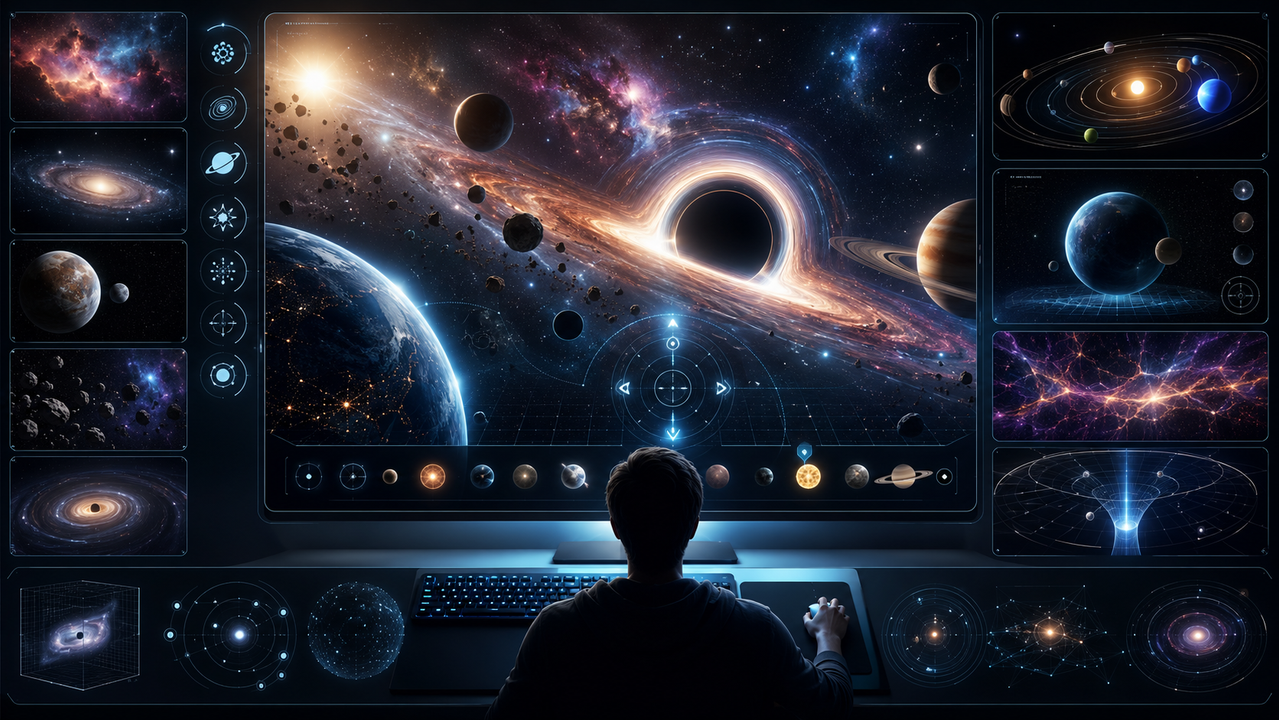
Seeing Space: An Interactive Visualization of the Universe
This project focuses on the difficulty and knowledge gap that many public users face when trying to understand astronomy and physics through complex mathematics. Better understanding of astronomy and physics can also help users engage more deeply with cultural works that use space, science, and cosmic imagination, such as 2001: A Space Odyssey (1968), Interstellar (2014), and Project Hail Mary (2026).
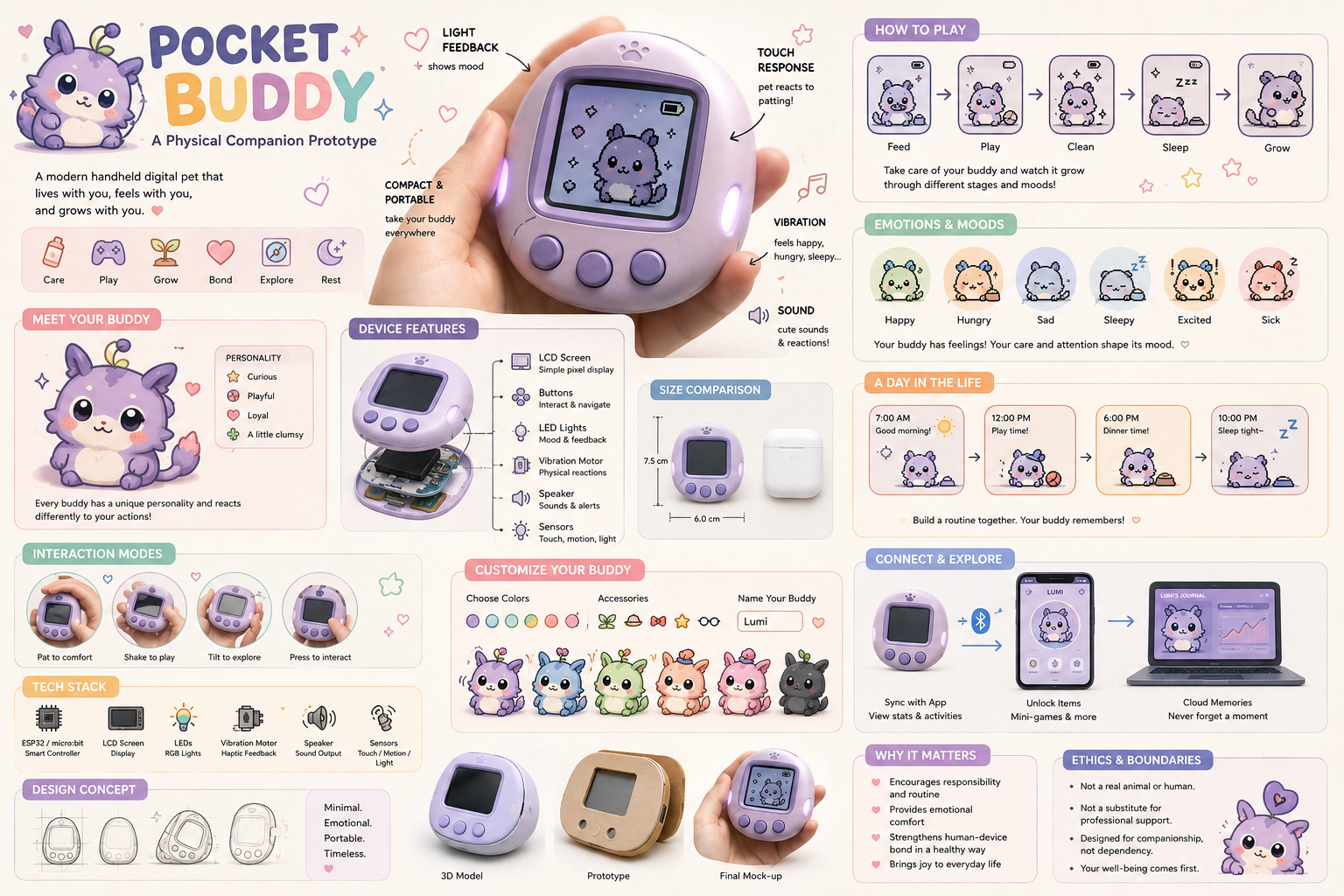
Handheld digital pets became a major part of popular toy and game culture in the 1990s, with Tamagotchi as one of the best-known examples. The original Tamagotchi was released by Bandai in Japan in 1996 and popularized the idea of a small device through which users could raise and care for a virtual pet. This project updates that idea for a contemporary context by asking how a small electronic pet can feel modern, personal, and emotionally engaging without simply copying older models.