
Waglan Lighthouse Virtual Heritage Project
Project Overview
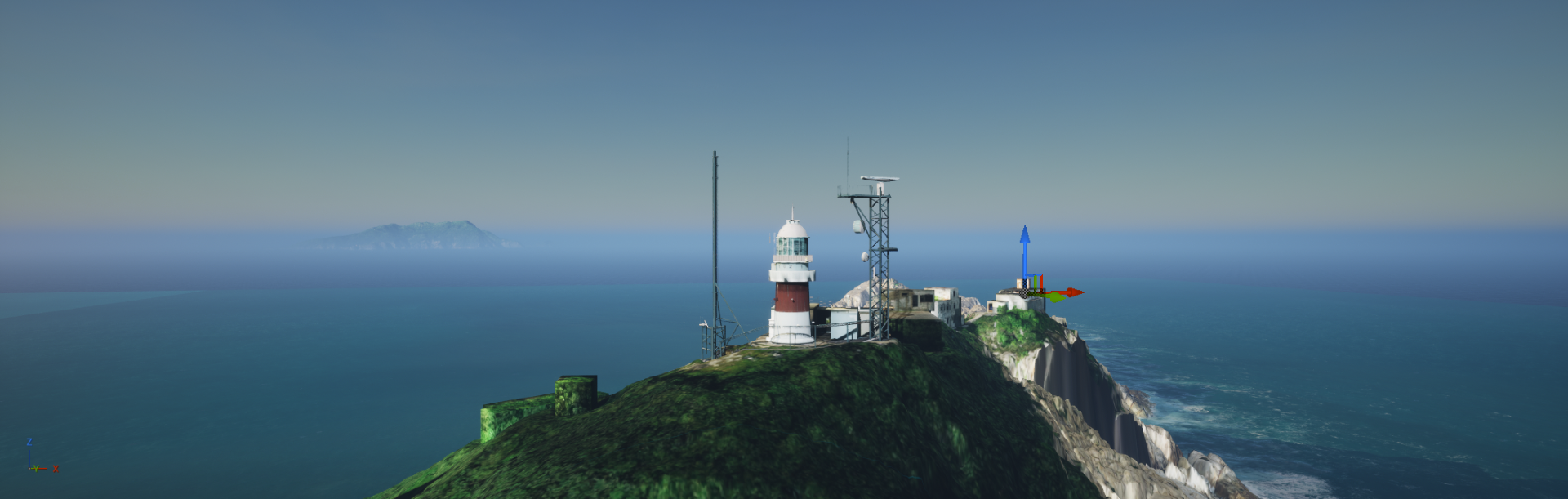
The Waglan Lighthouse at the eastern sea front of Hong Kong is rich in history and is a significant landmark for the collective consciousness of Hong Kong residents. During typhoon season the report of the wind speed invariably includes the island as a reference point on radio and news media. Yet the island is off limited to citizens and is unmanned after the 1980s when automation came to the lighthouse operation. Before the modern automation, the light house is maintained by lighthouse keepers stationed on the island, their stories were a fascinating chapter in Hong Kong maritime history.
The recreation of the island and the surrounding for an VR experience, especially during typhoon is the objective of this heritage project. The meticulous construction of the details of the locale is shown and introduced to students in the VR/XR 2205, Trajectory 2100, Total Design 2107, Imaginaries 2106 classes to illustrate virtual heritage, experiential design, historical narration and cultural imaginaries. Students are invited to participate in Project Internship 3100 [SIPP]-Student Internship Project with Partner to reconstruct the island experience in the game engine.
The virtual heritage project is under the broader project initiative of Hong Kong Imaginaries where Geospatial data of the Hong Kong territories are utilized to generate culturally and historically significant locales of Hong Kong with digital twin and game engine visualization and
interactive technologies.
Progress of the project and outstanding student work will be shown periodically at the Arts Tech Lab.
About the researcher
Dr. Kal Ng has experience in architectural design, film production and virtual reality applications, with a PhD in Architecture at HKU, Dr. Ng specialized in cross-disciplinary practices and creative work in film and animations. He operates an architectural design practice KGE LAB. His research includes immersive spatial cinema, gameplay and interactivities in virtual worlds and cultural imaginaries.
For inquiries, please contact
atlab@hku.hk